
Photovoltaic panels recycling
Process
9-Tech
Photovoltaic panels: opportunity and problem.
Opportunity
Photovoltaic (PV) technology is among the greenest and most promising for the planet, as it offers energy security and reduction of climate change.
Problem: a future made of waste?
The average lifespan of a photovoltaic panel is 25 years.
The first installations date back to the 2000s, so a significant increase in end-of-life photovoltaic panels is expected around 2025.
Mechanical treatment based on shredding photovoltaic panels is the only recycling approach currently available on an industrial scale, but its low yield has not yet allowed photovoltaic panel recycling to become an economically attractive activity.
The problems of mechanical treatment
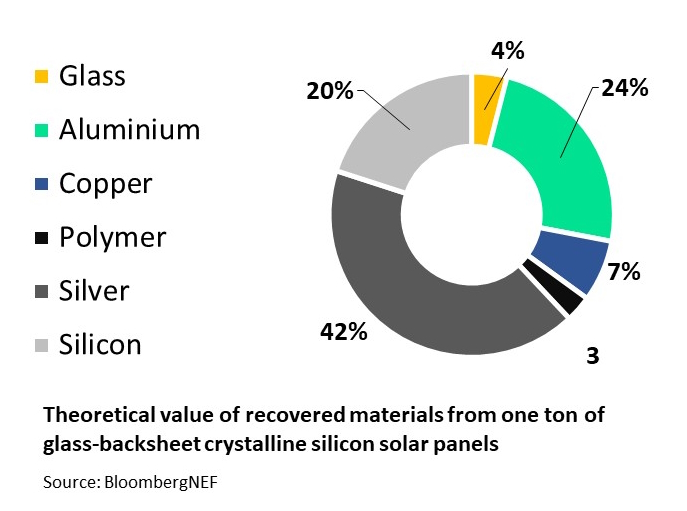
The mechanical process recovers aluminium from frames, glass granules and copper granules after sieving the shredded mixed waste. But it is not enough.
Il Processo 9-Tech Cos'è?
Starting from the know-how acquired during the ReSiELP project, since 2020 9-Tech has developed a new process that is efficient and cost-competitive:
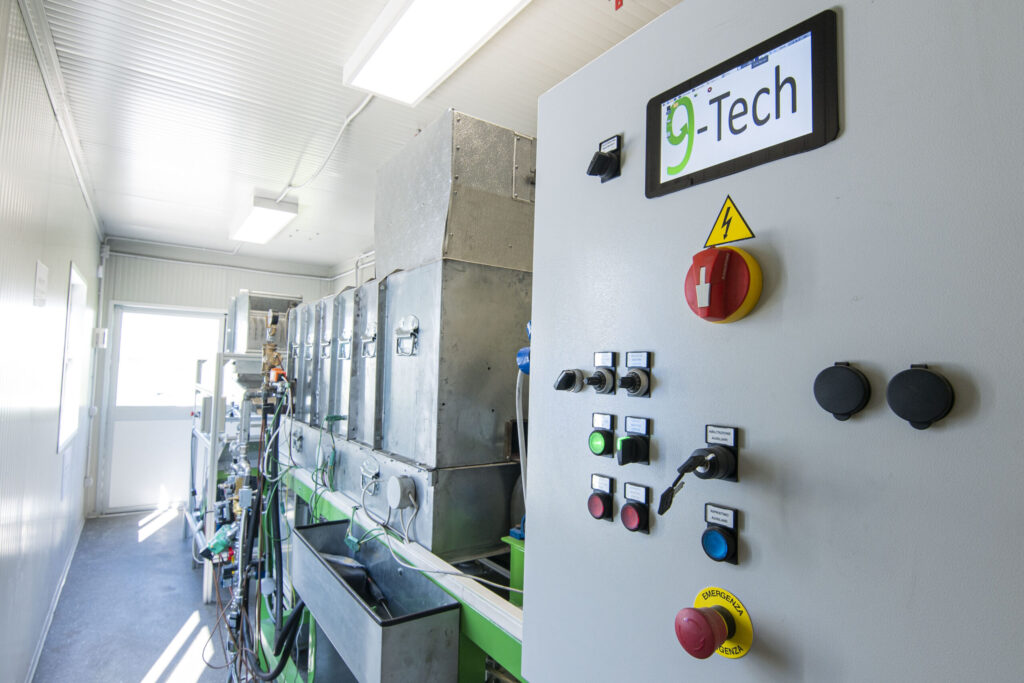
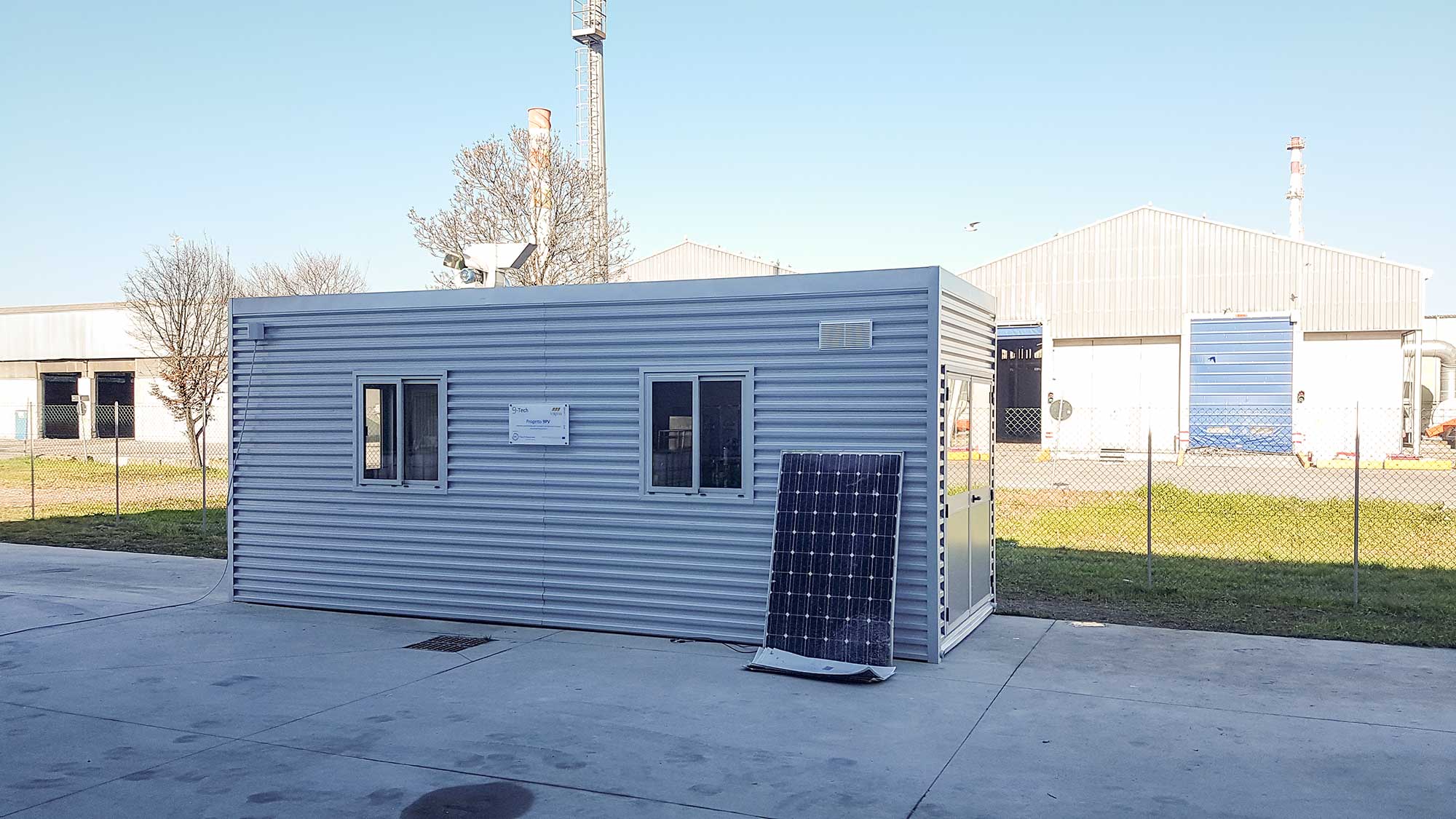
The thermo-mechanical treatment validated with our experimental plant (9PV Prototype) and industrialised with the 9PV-Up Plant.
In addition, there is a great deal of other research aimed at thecomplete valorisation of raw materials from photovoltaic panels.
The 9PV Prototype
The Thermomechanical Treatment
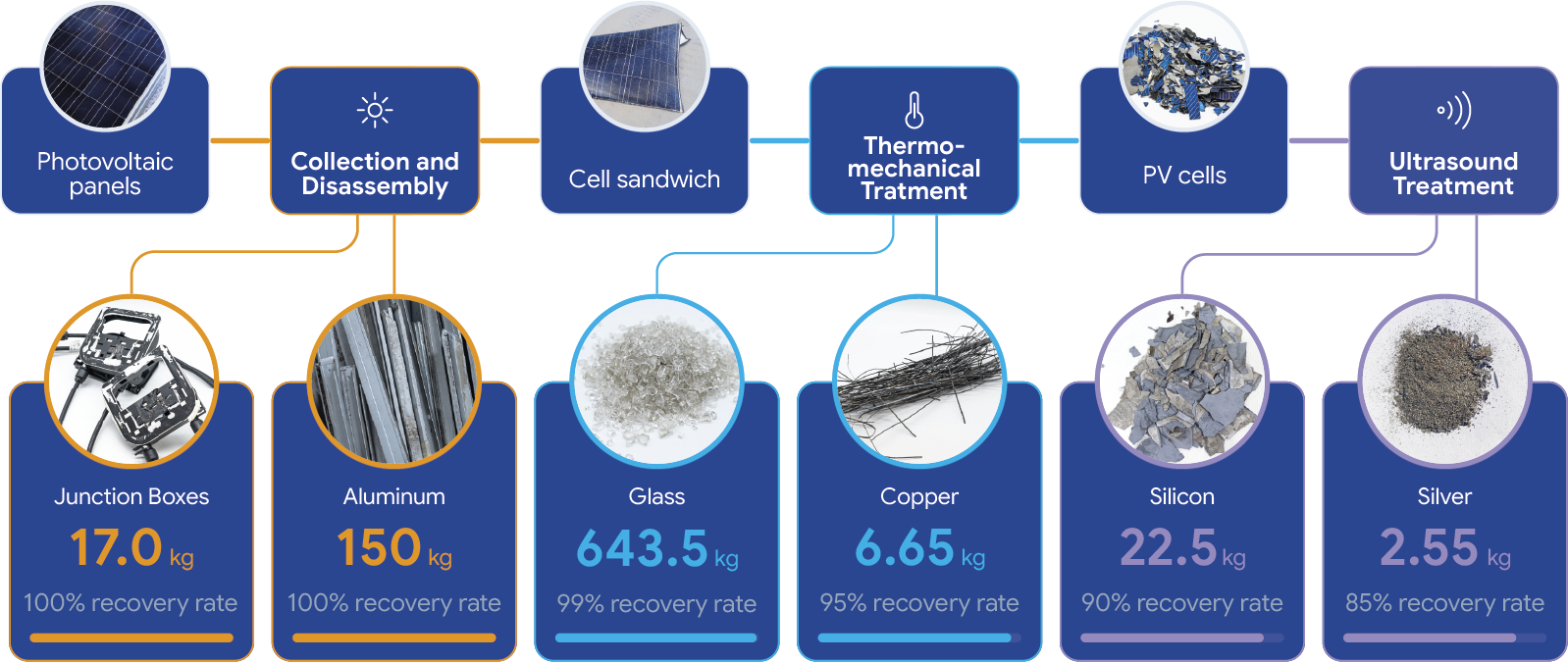
The experimentation began with a 2020 EIT RawMaterials Booster project, which launched the design of 9-Tech’s experimental photovoltaic panel recycling plant.
The plant, designed and built in 2020 and substantially modified and expanded in the following years, performs a thermal and mechanical treatment on the panels in order to recover the basic materials they are made of.
The technology is protected by several European patents and employs a much more efficient and advantageous process than the previous process studied during the ReSiELP project.
The 9PV plant is hosted at Veritas Group’s Green Propulsion Lab, a platform funded by the Ministry of Environment for the revitalization of Porto Marghera in Venice, which studies green technologies and hosts several innovative start-ups such as 9-Tech.
The experimental plant was authorised by the Veneto Region with decree no. 183 of 4 July 2022 and has demonstrated a processing capacity of 30 kg/h of panels.
The tests began on 7 November 2022 with the receipt of the first panels to be treated (about 360 kg), and since then the actual experimental activity has started and is still ongoing. The plant has already proven to have very high energy efficiency and the ability to recover materials in a form pure enough to be reused as secondary raw material.
Recovered quantities
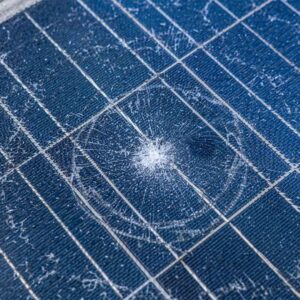
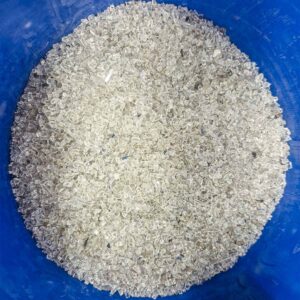
983
kg of glass
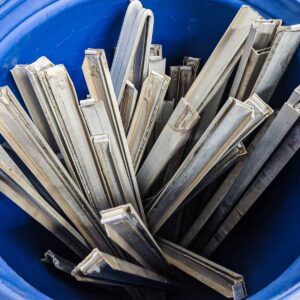
146
kg of aluminum
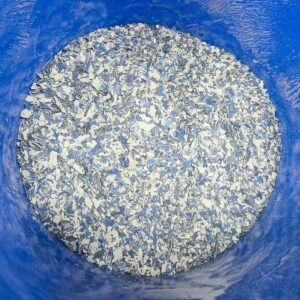
42
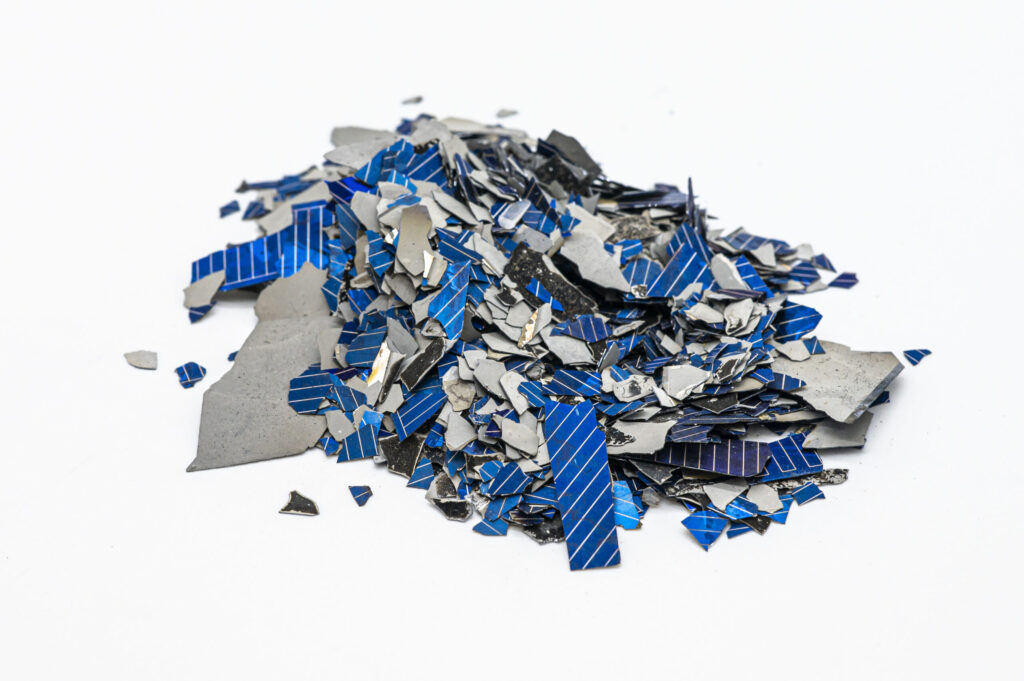
kg of silicon cells
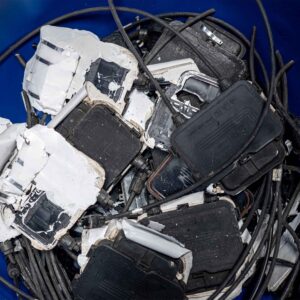
14
kg of junction boxes
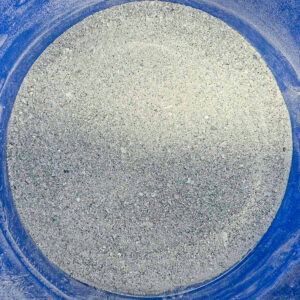
16
kg of powders
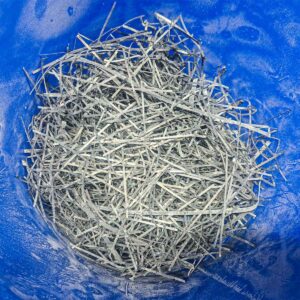
11
of copper ribbons
Silver recovery
The photovoltaic cells recovered with the experimental plant consist of silicon, aluminium and silver. Silver is by far the material with the highest specific value within a photovoltaic panel, so a treatment was developed that exploits the mechanical action of ultrasound and low-environmental-impact reagents for its recovery.
In January 2023, the patent application for the process was filed.
The development of this part of the treatment was carried out thanks to winning the InactionESG first prize from Intesa SanPaolo Vita and Fideuram Vita, received in 2022.
Il prossimo passo, insieme.
Sei interessato/a alla nostra tecnologia e a collaborare con noi?
Collaborations and supporters